Saturday, 7 November 2020

The 50 Greatest Books I've Ever Read


1. Divorce, Suicide and Other Forms of Closure by Ingmar Schnitzel (short story collection)
2. The Tyranny of Soap by Martin Loofah
3. Legs: Your Forgotten Friends by Perry Ambulate
4. Oliver Twist Rides Again by Charles Dickens (no relation)
5. Oliver Twist Goes to Monte Carlo by Charles Dickens (still no relation)
6. Haiku Mania (poetry anthology)
7. Yellow is the Color of Cowards and Sick by Sax Rohmer
8. This Banana is Loaded by Aurora Snark
9. Bucephalus Doesn't Live Here Anymore by Lawrence Equine
10. Harry Potter and the TERF Defamation Wars by J. K. Rowling
11. Gangrene vs. Mould: A War of Attrition by Siegfried Götterdämmerung
12. Stormy Jockstrap by Jackie Collins
13. Paper: A User Guide (pamphlet)
14. Five Go to the Planet of the Apes by Enid Blyton
15. Why Does it Hurt When I Watch You Pee? by Frank Zappa Jr.
16. The Complete Works of Shakespeare by Christopher Marlowe
17. Applied Heuristics in A.E.N. Language Structures by Prof. Jeremy Magrs
18. Heuristics for Beginners by Prof. Paul Hoad
19. The Oxford English Dictionary
20. Velcro for Dummies
21. Roger Moore's Breath Smells Like Coffee and Old Leather by Albert "Cubby" Broccoli (memoir)
22. Prepucially Challenged by Howard Stern
23. Euphemisms Aren't the Only How's Your Father by Chortle Gusset
24. The Glory of Nylon by Dame Cynthia Croptop
25. I've Never Seen So Many Carrots by Stephenie Meyer
26. Bum Party by Col. Arnold Trubshaw (Rtd.)
27. The Dandy Christmas Annual 1993
28. Eagles May Soar But Weasels Don't Get Sucked into Jet Engines (trainee pilots' handbook)
29. WordJam by Richard English (plug)
30. Eggbound in Paris and London - George Offal
31. Oliver Twist Meets the Wolfman by Charles Dickens (the other one)
32. Tawdry Otters by Aldous Huxley
33. Pork Scratchings for Christmas by Mrs Beeton
34. Chairman Mao's Vasectomy by Rev. Ernst Blofeld
35. Nancy Drew in Bangkok by Carolyn Keene
36. The Oranges, Lemons and the Bells of St. Clement's are All Bastards by Richmal Crompton
37. The Shetland Pony Murders by P. D. James
38. Transformers: Dark of the Moon by Michael Morpurgo (novelisation)
39. Crazy Paving: The Silent Killer (safety poster)
40. Donkey Hotel by Miguel de Cervantes (pidgin English translation)
41. Tintin at the Nuremberg Trials by Hergé
42. Tintin in Spandau Prison by Hergé
43. Tintin Refuses the Blindfold by Hergé
44. Wedgefast and Trouser: A Gentleman's Guide by Alexander McQueen
45. Laughing Gear: My Life in Comedy by Noam Chomsky
46. Docile Phlanges by Lillian Muffwrangler
47. Why I'm No Longer Talking to White People Who've Read 'Why I'm No Longer Talking to White People About Race' by Coleman Hughes
48. Doctor Who: Privilege of the Daleks by Paul Cornell
49. Shit Happens (car sticker)
50. An Apple a Day is Another Victory for Our Reptilian Overlords by David Icke

Wednesday, 9 September 2020

The UK Introduces New Rules on Social Distancing


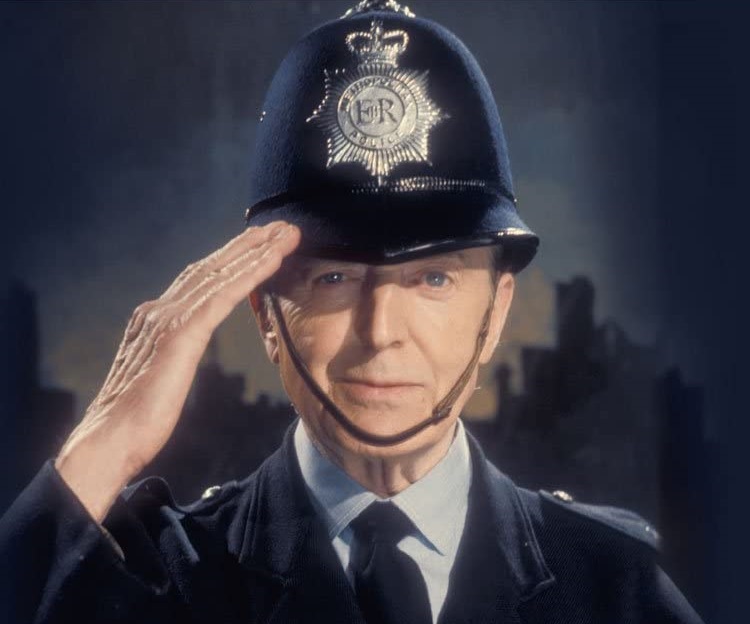
Evenin' all! Sergeant Etchasketch here from the Everyborough Metropolitan Police Force. As you're no doubt aware, new Covid measures will be enacted in England from Monday making it illegal for more than six people from different households to hold social gatherings. Since this will be enforced by Her Majesty's Constabulary, rest assured in-between overseeing Defund the Police marches, taking the knee at Black Lives Matter rallies, standing idly by while a bunch of middle-class environmental activists disrupt people's livelihoods and slapping peaceful anti-mask demonstrators with excessive fines, my colleagues and I will be out in force the length and breadth of the land keeping an eye out for anybody flouting these safety measures. How we're going to enforce it in pubs and restaurants is anyone's guess, of course, but it's not for the police to ask questions: we just follow whoever's shouting the loudest.

Oh, and one more thing. Now the economy's going into freefall and unemployment's on the rise you may be anxious that these new precautions represent both a backwards step on the road to recovery and a dangerous erosion of our civil liberties. Well, let me assure you that as long as you keep your head down, avoid making eye contact with quota-obsessed, cavalier police officers, don't say anything negative about lockdown on social media and, more importantly, stay indoors, England's as free and healthy a country as any other to live right now. Goodnight all! And don't have nightmares...

Thursday, 3 September 2020

Alexei Navalny: The Burden of Proof

Well here we are again, folks: another alleged 'hit' by the Russian State that raises more questions than it answers. And like the dutiful little MI6/CIA sock-puppets they are, British and US news outlets are busy dusting off speculative stories about the actual and attempted murders of Anna Politkovskaya, Alexander Litvinenko, Boris Nemtsov and Sergei and Yulia Skripal to add a little spice to what is otherwise a fairly patchy narrative. Okay, the west's coverage of Alexei Navalny's anti-corruption campaigns and failed attempts at taking political office have always been absurdly light on facts, but this recent attempt to elevate him to near-martyr status is just a joke. But, be that as it may, we're not here to discuss his cynical, opportunistic ethnonationalism - that's a story for another day. Instead, I just want to share a few brief thoughts on some angles the MSM has wilfully overlooked in its rush to pin Navalny's purported Novichok poisoning on the Russian State.

1. Novichok
According to the Organisation for the Prohibition of Chemical Weapons, Novichok is not only designed to be undetectable but is five times more potent than Sarin (which, regardless of the level of exposure, kills within ten minutes). If it was slipped into Navalny's now-famous pre-flight cup of tea, why did it take so long to act and how were German doctors able to identify it? (See also the Skripal poisonings.)

2. A Potential Threat?
According to a recent Levada Center poll, Navalny's approval rating in Russia is a lowly 3% - some way behind the Liberal Democratic Party candidate Vladimir Zhirinovsky at 13%, Prime Minister Mikhail Mishustin at 60% and Putin at 66%. In addition, the results of the recent constitutional reform bill seem to suggest the majority of Russians are happy to hold onto Putin for the time being. It's quite clear, then, that Navalny isn't someone the Kremlin needs to worry about. But if we take the MSM's line that he does constitute a threat regardless of his marginal status, why didn't they kill him during one of his spells in prison? Given his outspoken Islamophobia, it wouldn't have been difficult having him murdered and blaming it on a Chechen inmate. Basic.

3. International Relations
Just two weeks ago, Angela Merkel complained about the US placing economic pressure on Germany over the Nord Stream 2 pipeline. If it can be proved "unequivocably" the Russian State poisoned Navalny then why allow him to be taken to Germany for treatment when that would almost certainly sabotage the future of the project and risk further sanctions? (This, I would say, is the most logical argument against the 'gaslighting' narrative the media are fond of trotting out, although, bizarrely, it doesn't seem to have stopped them on this occasion.)

4. Belarus
With the protests in Belarus and the potential ousting of Lukashenko (who, regardless of what the media says, isn't exactly on the Kremlin's Christmas card list), the eyes of the world are currently looking towards Eastern Europe. Again, if Putin genuinely had something to fear from Navalny then why would you try and take him out so publicly when everyone's watching? This is the ultimate example of Russophrenia, where Putin and his administration are made out to be two conflicting things at the same time (in this case, clandestine and brazen, which is a hell of an achievement). And last but not least:

5. The Wild Card
Russia's just developed and patented a coronavirus vaccine, which, if successful, could bring a considerable revenue stream into the country. Naturally there are competing interests from other parties, so it's not too much of a leap to suggest an oh-so convenient scandal like this could lead to western nations boycotting Russian know-how and allowing another country to take the lead instead. This may be a conspiracy theory, but you've got to admit it's a lot easier to swallow than the cod-psychology and doublethink of the media's narrative.

* * *

Now before anybody out there accuses me of being a 'Russian bot', a 'Kremlin Stooge' or any of those other epithets people throw around to shut down debate (and believe me, I've had quite a few emails to that effect over the last couple of years) I'm not saying Russia's political system is without its problems or Putin is an unblemished saint, but this endless zero-sum game of smears, taunts and misinformation is not going to end well for anyone if we allow it to continue. With the US tearing up arms limitation treaties like they're going out of fashion and NATO pushing ever closer to Russia's borders we're going to have to wake up to the fact pretty soon that there are only so many times you can bait the bear before it bites back. Consider yourselves warned.

Monday, 17 August 2020

WordJam Message Board: Special Discussion

 Today's Topic: Is Cardi B and Megan Thee Stallion's WAP empowering for women?

JUstinBieberLover3988864592 - August 17, 18:21
i think its impowerring. every1 shud hav the inter net on there phone not jus men

RussiaBot1917 - August 17, 18:22
It's a song, moron.

JUstinBieberLover3988865592 - August 17, 18:25
oh ok

MelGibsonIsGod - August 17, 18:32
I watched the video on You Tube and it gave me such a boner I had to put on the crucifixion scene from Passion Of The Christ to calm down. That did'nt work and I ended up whacking off to the bit where the Romans hit Jesus with hammers. This song should be banned.

RainbowPrincess456 - August 17, 18:43
Empowering for women?! Are you KIDDING??!! This is THE most feminist, sex positive, LGBQIA+-inclusive track EVER!!!!!!! The haterz are just butthurt, white-male boomer conservatives who are afraid of BAME womxn of all genders.

Biden2020 - August 17, 18:50
Amen, sister! I bet Trump's quaking in his boots right now. The lesson here is you don't grab the pussy, the pussy grabs YOU!

RussiaBot1917 - August 17, 18:53
If it's meant to be so empowering to women why is the video full of lesbian action? Answer: it's designed for teenage boys to choke the chicken to. Wake up and smell the corporate coffee, sheeple.

WhoWatchesTheWatchmen9/11 - August 17, 19:07
(((They))) are promoting non-procreational sex to eliminate us from the gene pool.

Biden2020 - August 17, 19:12
Who are?

WhoWatchesTheWatchmen9/11 - August 17, 19:14
(((Little Hat Wearers)))

RussiaBot1917 - August 17, 19:17
The Chinese?

WhoWatchesTheWatchmen9/11 - August 17, 19:18
No

RussiaBot1917 - August 17, 19:19
Leprechauns?

WhoWatchesTheWatchmen9/11 - August 17, 19:20
FFS

KarenKilla - August 17, 19:32
@RainbowPrincess456: TERF bitch.

RainbowPrincess456 - August 17, 19:46
How am I a TERF?

KarenKilla - August 17, 19:51
It's LGBTQIA+ not LGBQIA+. Don't you recognise Trans people in your evil, cis-privileged world, or do you want to have them all wiped out like the gender absolutist little feminazi you obviously are?

RainbowPrincess456 - August 17, 20:02
That was a typo. It wasn't intentional. I have nothing but love and respect for the Trans community. I'm so sorry if I offended you. I really didn't mean to upset anyone. From now on I will proof read all my comments before posting them to make sure they are as inclusive as they can possibly be.

Biden2020 - August 17, 20:04
Don't worry about it! We all make mistakes :)

KarenKilla - August 17, 20:07
@RainbowPrincess456: Spare us your tears of privilege, TERF. People like you are worse than a thousand Hitler's.

BLM4EVA1865 - August 17, 20:11
@RainbowPrincess456: And it's not BAME, it's BIPOC. Educate yourself, you race-baiting fuck.

Biden2020 - August 17, 20:14
@RainbowPrincess456: Thinking about it, I find your blatent transphobia and racism deeply upsetting. You should be ashamed of yourself.

KarenKilla - August 17, 20:23
@RainbowPrincess456: If I ever find out your real name, where you live and what you look like I'm coming round to unload both barrels of a shotgun in your face, you sick, evil bitch. BELIEVE.

JUstinBieberLover3988864592 - August 17, 21:57
i jus watched it on you tube with the sound down so mom wudnt hear. its ok but its no blurred lines

Friday, 14 August 2020

A Wild and Crazy Guy: Steve Martin at 75


I've been planning on writing something about Steve Martin on WordJam for a while now, but I could never quite figure out what. A couple of film reviews, perhaps, or a retrospective of his novels and short story collections? Maybe an article about his music career? When you're dealing with a polymath it's hard to know where to start. Anyway, when I found out his 75th birthday was coming up I knew I had to do something to mark it. Martin's been one of my heroes since I was a kid, and alongside Peter Cook he's one of the single biggest influences on my own writing and stand-up.

I can't say with any certainty exactly when I first discovered Steve, but my earliest memory of him is from Little Shop of Horrors. Like most people of my generation who were children in the '80s that movie was required viewing in the halcyon days of cheap, mass-produced VCRs and rental shops. It wasn't until I was about nine or ten that I saw The Man with Two Brains, which without doubt was the funniest movie I'd ever seen up to that point. It was grown-up and childish, smutty and smart: perfect fare for a kid who enjoyed putting on funny voices to amuse his classmates. Although most childhood passions are fickle, my admiration for Martin never faded in my teenage years or beyond. Sure, I got exasperated with his film choices sometimes (I can just about bring myself to sit through Father of the Bride II or Cheaper by the Dozen again on a wet Sunday afternoon, which is more than I can say for Sgt. Bilko or The Pink Panther), but whenever I put on Let's Get Small, Three Amigos or even Shopgirl I still find myself bowled over by the range and quality of his work. I mean, how many comedians can you think of who are masters in slapstick, surrealism and satire?

So, as a little personal tribute I decided to do a rundown of my top ten Steve Martin films. There may be a few surprises here (spoiler: Parenthood didn't make the list, which certainly surprised me), but I think you'll agree the following titles demonstrate just what a rich legacy Steve has carved throughout his career. And if on the off-chance you're reading this, Steve, here's wishing you a happy birthday and a heartfelt thanks for all the memories.

* * * * *

10.
Pennies from Heaven
(d. Herbert Ross, 1981)
This big screen adaptation of Dennis Potter's ground-breaking BBC drama serial may lack the inventiveness and sophistication of the original, but Martin's superb performance as adulterous song sheet salesman Arthur Parker brings charm and emotional depth to what could easily have been a soulless, alienating blockbuster. Martin later reflected that the film's poor box office performance was down to audiences expecting The Jerk 2 instead of a Brechtian musical drama, but in retrospect Pennies from Heaven is an important chapter in the canon of Martin's work as it gives us an early glimpse of his aptitude at both subtle comedy and serious drama. And boy, can this guy dance.

9.
Little Shop of Horrors
(d. Frank Oz, 1986)
It's evidence of Martin's chops as a character actor that he's in Little Shop of Horrors for less than ten minutes yet still manages steal the entire film. Martin was perfect casting for the arrogant, sadistic Orin Scrivello, recalling the smarmy egotist persona he developed in his stand-up routines. We also get to see Martin appear onscreen alongside Bill Murray again, whose gleeful masochism leads to one of the most subversive and downright bizarre sequences in '80s cinema. On a side note, when I was growing up I knew many people who had an aversion to visiting the dentist after watching Little Shop of Horrors. If that's not the mark of a great movie monster I don't know what is.

8.
L.A. Story
(d. Mick Jackson, 1991)
There's a distinct Woody Allen vibe to L.A. Story that's hard to ignore. We get an unfulfilled intellectual frustrated by the vapidity of modern culture, a burgeoning romance with a beautiful, talented woman whose personal life is fraught with complications and a metaphysical plot device that draws attention to both the film's themes and the protagonist's emotional dilemma. So far, so Play It Again, Sam; The Purple Rose of Cairo; Oedipus Wrecks, etc. But Martin's imaginative world is the flipside of Allen's, revelling in infinite possibilities and hopefulness while taking joy from the absurd and banal. L.A. Story is perhaps the purest distillation of this life philosophy, and modestly profound to boot.

7.
Dirty Rotten Scoundrels
(d. Frank Oz, 1988)
I've never been a fan of Michael Caine's work, but the chemistry he shares with Martin in Dirty Rotten Scoundrels is absolutely palpable. Caine's roguish charm as a con artist looking to cheat an American heiress out of her fortune is expertly counterbalanced by Martin's sleazy, small-time hustler, transforming a relatively straightforward caper movie into a comedy masterclass. It's a shame there hasn't been another vehicle for Caine and Martin, but lightning rarely strikes twice. Besides, as the film fades on the closing credits we know exactly what the future holds in store for these two brilliantly written, beautifully played characters - the cinema in our mind's eye takes care of that.

6.
Roxanne
(d. Fred Schepisi, 1987)
Martin's witty resetting of Edmond Rostand's Cyrano de Bergerac is that rarest of beasts: a romantic comedy that follows logic rather than genre convention. There are no contrivances here; the characters are so textured that the plot flows organically from their actions instead of relying on barely disguised narrative impositions. It's a surprise, then, that Roxanne rarely seems to feature in lists of great romantic comedies. In its own quiet, understated way, this delightful film is equally as important as, say, Roman Holiday or Annie Hall in redefining what is often regarded as a throwaway or undemanding genre. It also boasts Martin's best acting performance, perfectly matched by the ever-wonderful Daryl Hannah.

5.
Bowfinger
(d. Frank Oz, 1999)
By the late '90s Martin wasn't quite the box office draw he had been earlier in the decade. As a new generation of comic talent emerged, Martin and many of his contemporaries found themselves facing diminishing returns or being side-lined completely. With this in mind, the story of down-on-his-luck film producer Bobby Bowfinger trying for one last shot at the big time is as close to a confessional as you can get. Martin's screenplay brims with humanity and affection for its ragtag collection of oddball characters who make up the also-rans and never-weres on the Hollywood fringe. Unlike other Tinseltown exposés, Bowfinger manages to deconstruct the showbusiness myth without bitterness or recrimination, making it one of the most singular (and therefore entertaining) film industry satires.

4.
The Man with Two Brains
(d. Carl Reiner, 1983)
In many ways, The Man with Two Brains marks the apotheosis of Martin's attempt to bring his own unique comic style to the big screen. No other film he made after this would be as chock-a-block with ludicrous flights of fantasy, absurd visual gags and delirious wordplay. Indeed, not even his previous films took such an 'everything but the kitchen sink' approach. If this was intended as a last hurrah before moving onto more commercial projects, and it certainly feels that way, then The Man with Two Brains is an undisputed triumph that deserves every bit of its cult status as the '50s mad scientist B-movies that inspired it. Like Airplane! and Naked Gun, it rewards - and stands up to - repeat viewings, yielding all sorts of lunatic treasures you're likely to miss the first time round.

3.
The Jerk
(d. Carl Reiner, 1979)
The Jerk launched both Martin's film career and a whole subgenre of wilfully crude, cheerfully un-PC comedies centred around deeply flawed protagonists trying to catch a break in a world pitted against them. What sets it apart from the Adam Sandler vehicles and Farrelly Brothers' gross-outs that followed, however, is an infectious sense of defiant optimism. This simple tale of an even simpler man who leaves his black adopted family for a soul-searching trip across country knows it's crass and dumb, and possibly even offensive, but the innocence of Martin's performance and the carefully carpentered script (co-written with Carl Gottlieb and Michael Elias) never allows it to sink into mean-spiritedness. Better-polished work was to come, but the fact The Jerk remains Martin's calling card shows how high he set the bar from the outset.

2.
Dead Men Don't Wear Plaid
(d. Carl Reiner, 1982)
An affectionate send-up of film noir, Dead Men Don't Wear Plaid follows private eye Rigby Reardon as he investigates the mysterious death of a cheese tycoon. Using footage from classic movies such as The Big Sleep, Double Indemnity and The Postman Always Rings Twice, Martin gets to share the screen with the likes of Humphrey Bogart, Ava Gardner, Charles Laughton and Joan Crawford as he finds himself sinking deeper into a world of heavies, murder plots and fifth columnists. The collage effect is seamless, never once spoiling the illusion we actually could be watching a movie from the '30s or '40s. I have absolutely no idea how Martin, Reiner and George Gipe even began writing the screenplay for this, but with so many great one-liners and comedy set-pieces on display it's churlish picking it apart. A criminally overlooked gem.

1.
Planes, Trains and Automobiles
(d. John Hughes, 1987)
Planes, Trains and Automobiles may be John Hughes' masterpiece and features the late, great John Candy's finest role, but consider Martin's contribution for a moment. Here you have the best comedian of his generation playing the antagonistic straight man to a larger than life, loquacious lug. It would have been easy for Martin to hijack the film by leaping on every humorous or emotional beat that presented itself to steal the limelight from his co-star; it's a testament, then, to both his generosity and intuitiveness as a performer that he lets Candy take the lead, trusts the material and shapes his characterisation accordingly. As a result, this riotously funny, endlessly quotable and deeply poignant tale of two mismatched personalities trying to make their way home for Thanksgiving effortlessly slides into the front-rank of buddy movies and sets a gold standard for cinematic double acts. If you don't have a tear in your eye or a song in your heart when the credits roll you're dead inside.

* * *

But no tribute to Steve would be complete without mentioning his television appearances over the years. From The Smothers Brothers' Comedy Hour to Saturday Night Live and The David Letterman Show, there's a fantastic treasure-trove of sketches and routines to rediscover or explore. I'll leave you for now with my personal favourite, first broadcast on The Tonight Show with Johnny Carson in '92. I've always been envious of comedians who can incorporate pathos into their act, but being able to tug at people's heartstrings while your flies are undone is the mark of a genius.

© NBC

Monday, 13 July 2020

William Hazlitt: Messages for Posterity

William Hazlitt (self-portrait, 1802)

"Rules and models destroy genius and art."
                                                           - William Hazlitt, On Originality (1817)

If George Orwell was once memorably described as a man who "can't blow his nose without reflecting on the state of the British handkerchief industry," the same can be said of William Hazlitt (1778-1830), one of the most gifted and controversial authors of his time. Like Orwell, Hazlitt wasn't censorious or a moraliser; his journalism presented complex ideas with acute insight and a fresh, unique style. Today, he is considered a sideline figure in Romanticism, the literary and artistic movement that swept across Europe in the late 18th century. But it should be noted, of course, that Romanticism is largely the invention of 20th century academia. There was no actual movement at the time (at least, not in England), and even if there were Hazlitt would certainly not have considered himself a part of it. As we will see, he stood alone against trends and fashions. Another great irony of Hazlitt's reputation is the relatively minor status he is afforded by modern critics, despite the fact his essays and articles appeared in national magazines before many of his poetic peers had even reached print. The time has surely come for a reckoning: for William Hazlitt to finally be recognised as one of the most important English intellectuals of the late 18th and early 19th centuries, and for his legacy as a free-thinker to be recognised in an era of fake news, identity politics and cancel culture. In fact, there could hardly be a more apt figure to help us navigate our way through these complicated and polarising times than Hazlitt.

In the late 18th century the word 'romantic' was not a complimentary term. It stood for ideas that were fanciful, impractical or inconsequential. Even Thomas Paine, the great polemicist, and now considered one of the first flowerings of English Romanticism, used the phrase derisively to describe state hierarchy in his influential pamphlet The Rights of Man (1791). This was the Age of Reason, where cultural and scientific advances imposed rigid structures of order and logic on art, literature and philosophy. The political landscape was particularly repressive. In England, the Tory administration under William Pitt was notorious for its savage economic policies, leading British citizens (mostly comprised of working-class labourers) towards high taxation, high inflation and mass unemployment. But in comparison with France, at least England had the illusion of democracy. The appalling poverty endured by Frence citizens was a direct result of the despotic sovereignty of Louis XVI, whose luxurious lifestyle was such a drain on state funds it practically bankrupted the country. Events in Paris from July 1789, however, were to shake the foundations of European society. This was the beginning of the French Revolution, where the central concepts of liberté, egalité and fraternité were to strike a powerful chord of dissension and expose the hypocrisy of the so-called Age of Enlightenment. It was this idea of individual liberty through both political freedom and that of the imagination which marked the birth of Romanticism. The French Revolution may have been the catalyst which sparked this new thinking, but (to mix metaphors for a moment) the seed of dissent had aleady been planted by the American War of Independence some fourteen years earlier - and it was William Hazlitt's first-hand exposure to the complex emotions surrounding that conflict which spurred him towards radicalism.

Hazlitt was born in Maidstone, Kent, the son of an Unitarian minister. In 1780, Hazlitt's father so outraged his congregation by openly advocating the American Revolutionary War that he was forced to move the family to Bandon in Ireland. It was there, after meeting American prisoners of war, that William Hazlitt Snr. made the decision to move Unitariansism to the United States, establishing the first church there in 1783. Returning to England a year later, the family settled in Wem, Shropshire, where the young Hazlitt was groomed for a life in the ministry. After a brief period studying at the Unitarian College in Hackney, exposed to the radical philosophies of Helévitus and D'Holbach, Hazlitt renounced the prospect of joining the church. His decision to become an author was cemented in January 1798 when he witnessed Samuel Taylor Coleridge preaching in Shrewsbury. It was through his aquaintance with Coleridge that Hazlitt was introduced to William Wordsworth and Charles Lamb. Hazlitt would later immortalise his long conversations with these men in his essay My First Acquaintance with Poets (1823), one of the most beautifully composed portraits of these writers in the language. Lamb, who was to become alongside Coleridge a lifelong friend, was sufficiently impressed by Hazlitt's articulacy and enthusiasm to offer him a post on The Morning Chronicle. The parliamentary reports and theatrical reviews he wrote for that paper brought him to the attention of more prestigious magazines such as The Examiner and London Magazine; it was through these publications that Hazlitt was to make his name as both a controversial personality and original thinker.

Samuel Taylor Coleridge (1804) by James Northcote

Hazlitt's style was honed through the deployment of non-ornamental language, coupled with the use of aphorism, as a means to intellectual enquiry, often lending his writing a direct, almost theatrical flavour. One piece begins with the title 'What is the People?', only to be followed in the first line of the essay by " -AND who are you to ask the question?", revealing a somewhat eccentric personality at play. He described himself as a "Radical liberal" but held great sympathy for the high-Toryism of Samuel Johnson. He preferred the rustic serenity of Constable to the frenetic seascapes of Turner. In 1825, when asked to write a review of the recently deciphered diaries of Samuel Pepys, he chose to write about Shakespeare instead. The extrordinary range of Hazlitt's writing, from his account of the "fine gentleman at the play [sic]" who "enters the boxes with a menacing air, as if prepared to force his way through some obstacle he resents beforehand" to his critique of Thomas Malthus and mandatory depopulation presents an insight into an enquiring mind trying to make sense of his time. But it is not contentious to argue that a number of Hazlitt's preoccupations seem highly advanced for the 19th century and strongly anticipate many of the concerns we find ourselves grappling with today.

Hazlitt was particularly suspicious of the popular press with its "flimsy circulating medium of magazines," which he claimed had reduced modern authorship to "a species of stenography." This appears a paradoxical argument when we consider Hazlitt made his name and earned a living through journalism. His supposition that "we read by proxy, we skim the cream of prose without any trouble; we get at the quintessence of poetry without loss of time" appears damning, as does his contention that "literature and civilisation have abstracted man from himself so far; and the press has been the ruin of the state." This is not a Swiftean discharge of bile, but serves to remind us of the complex relationship between author and reader, creating a direct - if imaginary - discourse between the two. By reminding us of the press' power to corrupt, and the consequences for the people who become corrupted as a result, Hazlitt asserts our personal sovereignty and freedom of thought as individual human beings. In his essay On Characteristics (1823), Hazlitt observes "Truth is not one, but many" and that "an observation may be true in itself that contradicts another equally true, according to the point-of-view from which we contemplate the subject." This is a clear reference to Relativism, a school of thought largely ignored by Enlightenment thinkers, and one which would not gain currency until the 20th century. The self-reflexity Hazlitt demonstrates throughout his writing is not just a sign of his modernity but his remarkable prescience as an author. On the Characters of Shakespeare's Plays (1817), one of Hazlitt's most celebrated essays, effectively constitutes the first series of case studies in English literature. The process of psychological examination Hazlitt employs to explain character motivation is exemplary in that he was writing at a time when no practical model of psychological analysis existed. In a similar vein, Hazlitt described his own work in the essay On the Causes of Popular Opinion (1821) as "the thoughts of a metaphysician expressed by a painter [...] subtle and difficult problems translated into hieroglyphics": an aphorism that casually pre-empts both Charles Dodgson's influential studies of symbolic logic and the Structuralist philosophy of Roland Barthes.

Hazlit's work, and, on occasion, Hazlitt himself, was often the subject of scrutiny. In Blackwood's Magazine, John Lockhart denigrated Hazlitt as a member of the "Cockney School of Poetry" - effectively describing him as illiterate and uneducated. In his day Hazlitt was the first journalist to make a living solely through his writing, so it was inevitable his detractors took great delight in his imprisonment for debt in 1822. But it was his affair with Sarah Walker, a young maid in his service, which left him all but ostracised by the literary community. The fact that she was still a minor, some 29 years younger than Hazlitt, served to confirm his image as a seditious radical dangerously loose in polite society. In an attempt to justify his obsession with Walker, Hazlitt wrote an epistolary novella purporting to represent the correspondence between the two - not so much to explain the situation to others, he stressed, but in order to understand it for himself. Liber Amoris, or the New Pygmalion was published in 1823 and was instantly vilified by the press. The critical backlash was so intense it even dwarfed Thomas De Quincey's Confessions of an English Opium Eater published a year earlier. Hazlitt's reaction was to set about writing his life's work: a four-volume history of Napoleon.

Hazlitt had been present when Napoleon was brought to England aboard HMS Bellerophon in July 1815, and was surprised to find that the vanquished emperor was not the "unclassifiable being, half-African, half-Mediterranean mulatto" the Morning Post had described but well-proportioned and handsome. His admiration for Napoleon was not unusual (many Englifh people felt he had proven himself a worthy foe), but sometimes it would veer into the realm of out-and-out idolatry. J. B. Priestly described Hazlitt as a 'proto-socialist,' so his sense of awe that Napoleon could achieve so much by "sheer effort of will [...] a modern Tamburlaine" is puzzling, but then Hazlitt was aware that the question was much more interesting than the answer - representing, in the words of his literary idol Sir Francis Bacon, "a knowledge broken." That The Life of Naploeon (1828-30) fails to honour this intellectual process is unfortunate. In poor health and facing insolvency, Hazlitt rushed to complete the work by quarrying much of the information from other sources. He only lived to see the first volume published, and even that aroused fierce controversy. His account of the French Revolution provoked particular outrage. Some contemporaries were disgusted by his veneration of an act directly opposing the established social order, while others were embarrassed by his inability to engage with the facts of the Revolution: that it had overthrown a despotic monarchy only to allow an autocratic emperor to usurp executive power.

Napoleon on Board the Bellerophon (c. 1880) by Sir William Quiller Orchardson

To be fair, many of these criticisms were the by-product of a fashionable cynicism now sweeping literary society. In his early adulthood, Coleridge had been an enthusiastic supporter of the Revolution, even wrting an ode inspired by the storming of the Bastille. By 1798, he publicly declared, "I have snapped my squeaking baby-trumpet of sedition and the fragments lie in the lumber-room of penitence." In Europe, this wave of disillusionment had reached its peak. "The age treats us harshly!" Franz Schubert wrote to Caspar David Friedrich in 1810. "The young people so seemingly full of promise and energy, who some six years ago wanted to storm the intellectual skies, to bring a new blossoming of poetry and science - where have they gone?" Friedrich's response was to "find solitude in order to communicate with nature." This was the route that Wordsworth and Coleridge decided to take. Even William Blake muted the references to radical politics in his poetry. The noose had started to tighten in 1793 when William Pitt called for the ban of "wicked and seditious literature." Thomas Paine had been forced to flee after a warrant was issued for his arrest. Art and literature were now a dangerous medium to effect social change. In remaining true to his ideals, Hazlitt had set himself out of step with the literary establishment. By the time he completed the final volume of Napoleon he was a disillusioned and broken man.

When Hazlitt died in 1830 at the age of 52, a result of the years of poverty he endured, the Sarah Walker scandal had completely overshadowed his reputation as an author. Thomas Love Peacock, a former supporter turned rival, coldly declared Liber Amoris and The Life of Napoleon to be "the incoherent last musings of a sometime polemicist turned full-time libertine and whore-master." John Lockhart, meanwhile, referred back to his earlier dismissal of Hazlitt as one of the Cockney School and stated his "spent discourse was, at best, romantic" (the irony of which is that Lockhart himself has now been incorporated into the canon of English Romantic thinkers). It was not until the latter part of the 19th century that Hazlitt's reputation would undergo reassessment. Even W. C. Hazlitt, his grandson, was the victim of the long-standing grudge against him by the literary establishment. By 1889, modern literature had become a respectable field of study and many forgotten figures were reappraised. In his seminal work A History of 18th Century Literature (1890), Sir Edmund Gosse ranked Hazlitt alongside Thomas Paine, Edmund Burke and Leigh Hunt as one of the most influential and forward-thinking authors of his era.

In many ways, Hazlitt's work had not been completely ignored. It's hard to imagine William Morris' lectures on socialism or John Ruskin's art criticism without Hazlitt's influence. Throughout the 20th and early 21st centuries, Hazlitt's name has been evoked numerous times in relation to a wide range of authors. George Orwell has been classed as a direct lineal descendant of Hazlitt (his likening of Hitler on the cover of a 1946 reprint of Mein Kampf to "an image of the dying Christ" brings to mind Hazlitt's reference to Napoleon as "a modern Tamburlaine"), while Dennis Potter's television plays contain many allusions to Hazlitt's work - most notably The Confidence Course (1965), where Potter evokes the ghost of Hazlitt as a disruptive outsider at a Dale Carnegie Institute meeting. But then, Hazlitt has always been an outsider: not just within Romanticism or the literary establishment, but.within his own time With the complex arguments and issues thrown at us by the popular media today, perhaps Hazlitt has finally found his place as a true visionary.